Friday, March 12, 2010

Conclusion on Third Question

Thanks to Munira, Intan and Shikin. It is likely to say that Malaysia is indeed pursuing good roles in combating the violation of human rights in a distinguish way. As what Munira stated earlier on, the investment and trading in Africa in terms of economy by the Malaysian government has resulting an effective cooperation within these two nations. Investing in telecommunications, hotels, banking and real estate sectors has directly providing job opportunities among the locals for a better earning for living, in another words, to afford basic human needs such as clean water, nutrition, health care, clothing and shelter. Foreseeing such potential in Africa, Malaysia is also expecting a better understanding within the countries in coping the humanitarian issues as one of the responsibilities in keeping the world in peace and harmony. But we must be noted that, this effort may takes many years to achieve the goals but nonetheless creating an inspiring image for Malaysia in the eyes of the world.

As for Intan's argument, I would like to clarify that SUHAKAM did not play as a major contributer in terms of tackling up with the African humanitarian issues. Somehow i would say that, it has brought up attentions among the Malaysian citizens on the importance of human rights. It is about the awareness, that may have been leading many individuals to open up and share their thoughts about violation of human rights outside of Malaysia. Moreover, many positive actions such as financial support by NGOs to fund humanitarian activities like MERCY and even the younger generation are now voicing out their opinions through websites and blogs. The Islamic Relief Malaysia is a good kick-start. Although it has just started few years back in Malaysia, it is a reputable platform to encourage more Malaysians to join and contribute together in the international level in aiming to provide rapid relief in the event of human and natural disasters and to establish local development projects to eradicate poverty, illiteracy and disease.

A very interesting point-of-view by Shikin. I agreed that the 'Asian Value' has been a great factor on molding the understanding of human rights among the nations in this region. Despite the disputation over the Western thoughts, the Asian has learned great lessons of history. Many Asian countries before independence lived in a very unfortunate condition with the existence of hierarchy and discrimination of the rich towards the poor. Although we see that the Western invasion had caused economy exploitation and political crisis, the influence of Western thinking has brought up many famous local scholars to fight for their rights. Hence, inspiring modernization and developing a sustainable nation. Upon the criticism for our 'bold' movements is a norm to smaller countries like us. This is due to the lack of publicity and coverage.

I believe, with a little help would save thousands of lives in Africa. As the future think-tanks, we hope to conduct a substantial human rights policy in order to generate a conducive world of peace and harmony and to uphold the equality of all nations.

by Hazie Kan <3

Malaysian Approach On Human Rights

Malaysia takes a holistic approach on human rights that it's views all rights as indivisible and interdependent. All Malaysian were protected by laws under the Fedaral Constitution that chartered from the freedom of religious to the rights of justice for everyone. But these rights are not absolute and subjest to public order, morality and national security, among others which is consistent with Universal Declaration of Human Rights (Ministry of Foreign Affairs. 2009). Malaysia took the 'Asian Value' which means the laws and rules were set up according to our values and norms to suit the people. This is to make sure the equality and fairness for everyone and to keep the harmony among our multiracial people. We are definitely cannot follow the Western's way thoroughly because of the differences on our cultural and social. Futhermore not everything that came out from the West is right. As Tun Mahathir Mohamed once said,
'We believe that human rights always applies to the majority, who should have its rights protected. When people demonstrate and go to the streets, they deprive the majority from earning the living'.
In years, Malaysia has been supporting the development of human rights in this region and internationally. Malaysia is part of the Asian Human Rights Commission which is one of the main organization that working on promoting human rights in Asia. This cooperation is one platform for us to get involve in international arena. In Africa specifically, we have been helping them through investments and developments in few of the countries there, as been stated in the earlier posts by other members of my group. Besides that, a few Malaysian NGOs are working independently in helping these dire nations such as Mercy.
Eventhough we have been critized by others (mainly by the West) for our 'bold' movements on this issue but so far we had managed to uphold the justice for the people. Human rights is not an 'easy' issue as it involves many aspects and the fact that it is hard to please everyone.

Thursday, March 11, 2010

The Role of Islamic Relief Malaysia


In my opinion, I am quite disagree with the Hazie opinion on The Human Rights Commission of Malaysia (SUHAKAM) in the context of Malaysian contribution towards the human rights issue in Africa. As we know, SUHAKAM only one of the Malaysian government agency that promoting human rights among our nation. Despite of that, Malaysian Medical Relief Society (MERCY Malaysia) is one of our NGO's that really active on medical assistance especially in African conflict situation. I will share with all of us about the Islamic Relief Malaysia non-government organization that contribute in humanitarian assistance in East Africa.


ISLAMIC RELIEF MISSION

Islamic Relief strives to alleviate suffering, hunger, illiteracy and diseases worldwide regardless of colour, race gender or creed, and to provide aid in a compassionate and dignified manner.

Islamic Relief aims to provide rapid relief in the event of human and natural disasters and to establish local development projects to eradicate poverty, illiteracy and disease.

ISLAMIC RELIEF BACKGROUND

Islamic Relief is a Non-Governmental Organization (NGO) for emergency relief and sustainable development dedicated into helping the world’s poorest population.

Established in 1984 in Birmingham, United Kingdom, Islamic Relief is the first Muslim humanitarian organization to be formed in Europe. The Founder, Dr. Hany al-Banna decided to establish Islamic Relief after he witnessed the effect of devastating famine in sub-Saharan Africa. Islamic Relief headquarter remained in Birmigham to date.

In 1988, its capacity grew to become a functional team. In 1993, Islamic Relief obtained a consultative status with the United Nations Economic and Social Council (ECOSOC).In 1992-1993, more offices were established in Europe: Albania, Belgium, Bosnia, Croatia, Germany, France, Italy, Netherlands, Switzerland, as well as in the United States.

Until now Islamic Relief is actively involved in emergency relief and humanitarian development worldwide including Afghanistan, Albania, Bangladesh, Bosnia, Chad, Chechya, China, Mesir, Ethiopia, Indonesia, Iraq, Jordan, Kenya, Kosova, Lebanon, Malawi, Mali, Nigeria, Pakistan, Somalia, Africa, Sudan and Yemen.

ISLAMIC RELIEF MALAYSIA

Islamic Relief Malaysia was officially formed in Malaysia in 2005. Understanding the mission, Islamic Relief Malaysia main objectives are to support fundraising and continue Islamic Relief humanitarian aid in the region. Islamic Relief Malaysia is also responsible to increase awareness and providing accurate and updated Islamic Relief information to people in Malaysia.

Other than fundraising, Islamic Relief Malaysia also implement community, economies and social development programs in Malaysia where the target group beneficiaries are the poor, orphans, single mothers, senior citizens and physically challenged.

Kenya

Islamic Relief is currently working in Mandera District which have been seriously affected by the drought and food crisis.

We are currently running 27 supplementary feeding centres which are providing emergency food and nutritional support to thousands of malnourished children and pregnant women. Our teams of health workers visit local communities to identify those in need of support and then refer them to our health centre where they receive rations of highly nutritious food as well as essential medical care.

To help communities affected by drought we have repaired and constructed new water systems, providing more than 75,000 people with clean, safe water. We have also set up water committees and trained local people as health and hygiene promoters to reduce the incidence of waterborne diseases.

By providing training, equipment and seeds, Islamic Relief has also been successful in helping hundreds of farmers to irrigate their land and to grow crops on previously arid land. We have also set up grain and fodder banks to help pastoralists and farmers cope with the ongoing drought and lack of pasture.

Ethiopia

In Ethiopia we are working in the Somali region and the Afar region in the east of the country. Here we are helping communities affected by water shortages by repairing and cleaning water sources.

Most people in these regions are pastoralists who are dependent on their animals for food and a source of income. To help local communities preserve their herds we are providing community-based veterinary services, vaccinations and training to improve the health of their animals, which is benefitting more than 10,000 people.

We have also constructed new water sources which are providing more than 1,000 people with clean drinking water.

However, the needs in Ethiopia are vast and people in these regions desperately need access to food and clean water, as well as assistance for those who are malnourished. With your help, we can do even more.

Conclusion: The Islamic Relief have seen working in East Africa by assisting people affected by drought, conflict, and food shortages. They also providing the emergency food and nutritional support, constructed new water system, and open a health care for medical treatment and care for people in Kenya, Ethiopia, and Somalia. Lastly, Malaysia should increase the number of non-government organization as it will show our civilized country and helping the African people especially with the medical and food assistance as we live in world community.

Sources: http://www.irm.org.my/portal/ir-malaysia

Posted by: Intan


Malaysia's contribution to Africa through SIBEXLINK


Even though Africa is quite far from Malaysia, we still try our best in helping a countries that needed help in helping to raise the country to become a developing countries. Other than assisting in medical assistance as Hazie have shared with us, Malaysia try to contribute in other aspects.
The contributions that Malaysia’s government have done in helping African countries is by investing telecommunications, hotel, banking and real estate sectors. This is also a chance for Malaysia to seek business and investment partners outside our traditional partner to enhance our country capabilities and to diversified our economy. Below, was one of the article that showed Malaysia’s effort in helping the African countries


Trade between Malaysia and Africa up over last 5 years

KUALA LUMPUR - Trade and investments between Malaysia and Africa have shown encouraging results over the last five years, said Deputy International Trade and Industry Minister Kerk Choo Ting.

He said trade between Malaysia and Africa rose from RM881 million (U.S.$1=RM3.80) in 1993 to RM4.65 billion last year. ''Investments from Malaysia to Africa had increased from RM12 million in 1992 to RM115 million in 1996,'' he said here Tuesday at the opening of the four-day UNCTAD Asia-Africa business networking forum on trade and investment diversification.

The forum, which is financed by the Japanese government, consisted of more than 25 entrepreneurs from 10 sub-Saharan African countries. It was aimed at facilitating trade and investments between South Asia and sub-Sahara Africa by providing opportunities for companies to network directly with their counterparts as well as establishing new business contacts and promoting networking among entrepreneurs from the two regions.

Kerk said that in 1997 Malaysia's investments in South Africa amounted to RM133 million while the main exports to Africa were palm oil, palm stearin, vegetable oils and fats, plastic products, civil engineering and contractors' equipment.


Meanwhile, Masafumi Kuroki from the Japanese Embassy in Malaysia said Japan is determined to continue supporting Asian countries in their respective economic recovery and economic structural reforms. Kuroki said that, following up the establishment of the Asia-Africa Investment Information Center last October, the Japanese Government is planning to set up such a center in Malaysia within the framework of South-South cooperation in a joint effort with the South Investment Business Exchange Link (SIBEXLINK).

''It is aimed at supporting activities related to investment and technology promotion and providing Asian countries with African investments and technology-transfer related information,'' he said. ''No doubt, Malaysia is best placed to promote Asia-Africa cooperation."


Source : http://www.atimes.com/se-asia/AC03Ae03.html (Asia Pulse/Bernama)

Sudan’s Darfur our worst crisis: Mercy Malaysia

An article to share. MERCY Malaysia is putting an effort into reaching its goal to find sponsors to fund the medical assistance and support the administration for Sudan relief work.

PUTRAJAYA, Nov 5 (Bernama) — Malaysian Medical Relief Society (Mercy Malaysia) president Datuk Dr Jemilah Mahmood has described the humanitarian crisis in Darfur, Sudan, as the worst crisis the non-profit organisation has had to deal with in its medical relief work around the world.

She said the situation was worsened by the area’s almost complete lack of basic amenities coupled by Mercy’s limited budget.

This however has not prompted Mercy to stop its relief work. In fact, she said, several of its volunteers quit their jobs in order to join Mercy’s work in Sudan.

"The volunteers say they can find a job anytime," she said in her address at a ceremony to mark the presentation of a RM300,000 contribution from the government to Mercy Malaysia’s Appeal for Darfur, Sudan Programme. The cheque was presented by Foreign Minister Datuk Seri Syed Hamid Albar to Dr Jemilah at Wisma Putra.

"It is to show the interest of the government to help in humanitarian work," he said.

Dr Jemilah, when interviewed, said Mercy’s focus was on health as it encompassed food, nutrition and shelter - all necessary to improve the condition of the displaced Sudanese.

"Our main focus has always been on women and children. Now it is always a challenge because the big non-governmental organisations (NGOs) are there and they have big money and big projects.

"So we have to see what we can utilise the money for in a way that is beneficial for the people there and yet is within our budget constraints," she said.

The refugee camps house some 1.2 million internally displaced persons, 88 per cent of whom are without shelter and 75 percent are children and women.

Dr Jemilah said Mercy would start a nutritional programme for children on Dec 1, and a maternal and child development centre capable of accommodating 1,000 children has been built in Kerinding 2 camp.

"What we are going to do is to use that as a base for us to get the children to come in and get proper nutrition and screen them for malnutrition and so forth, so that they get enough food," she said."

source: http://www.sudantribune.com/spip.php?article6352
by Hazie Kan <3

Question 3 - To Discuss The Malaysian Contribution Towards The Human Rights Issues In Africa

The Malaysian government is aiming to achieve as a fully developed country by 2020 as expressed in Wawasan 2020. One of the aspects that has been emphasized through decades after its declaration by the former Prime Minister, Tun Dr. Mahathir on 28 February 1991 is the human rights among its nation. In able to have the effect into promoting the awareness of upholding human rights, every Malaysian citizen has to clarify doubts about their own rights. This includes the right to vote freely, freedom of religion, equality of religion, independence of the legal system, freedom from torture, freedom of speech, freedom from discrimination, et cetera. Governmental and non-governmental organizations have been pursuing their roles in highlighting issues of human rights violation and fighting for the justice and peace.

The Human Rights Commission of Malaysia (SUHAKAM) was established by Parliament under the Human Rights Commission of Malaysia Act 1999, Act 597. The Act was gazetted on 9 September 1999. The inaugural meeting of SUHAKAM was held on 24 April 2000.

The initiative to set up a national human rights institution in Malaysia began with Malaysia's active participation in the United Nations Commission on Human Rights (UNCHR) in 1993-95 when it was elected as a member of the Commission by the United Nations Economic and Social Council. Malaysia was honored in 1995 with the election of the leader of the delegation, Tan Sri Dato' Musa bin Hitam, as the Chairman of the 52nd session of the UNCHR. Malaysia was elected to serve a second term in the UNCHR from 1996-98 and its third term from 2001-2003.

Section 2 of this Act defines "human rights" as referring to the "fundamental liberties as enshrined in Part II of the Federal Constitution".

The functions of SUHAKAM as set out in Section 4(1) are:

  • To promote awareness of and provide education relating to human rights;
  • To advise and assist Government in formulating legislation and procedures and recommend the necessary measures to be taken;
  • To recommend to the Government with regard to subscription or accession of treaties and other international instruments in the field of human rights;
  • To inquire into complaints regarding infringements of human rights.

Furthermore, section 4(4) of the Act provides that regard shall be had to the Universal Declaration of Human Rights 1948 (UDHR) to the extent that is not inconsistent with the Federal Constitution. This means that whatever rights and liberties not mentioned in Part II but referred to in the UDHR must be considered provided that there is no conflict with the Constitution.

The function of inquiring into complaints about human rights infringements is subject to the conditions imposed by section 12 of the Act. Section 12 empowers SUHAKAM to act on its own motion to inquire into allegations of infringement of human rights, in addition to acting on complaints submitted to it. SUHAKAM, however, may not investigate complaints which are the subject matter of proceedings pending in a court of law or which have been finally decided by any court. Such investigations have to cease if the matter being investigated is brought before the courts.

Power

The Act provides SUHAKAM with powers to enable it to discharge its functions effectively. Under section 4(2), the Commission is empowered to do the following:

  • To undertake research by conducting programs, seminars and workshops and to disseminate and distribute the results of such research;
  • To advise the Government and/or relevant authorities of complaints against them and to recommend appropriate measures to be taken;
  • To study and verify any infringement of human rights;
  • To visit places of detention in accordance with procedures as prescribed by laws relating to the places of detention and to make necessary recommendations;
  • To issue public statements on human rights as and when necessary to undertake appropriate activities as are necessary.
Other than that, non-governmental organisations such as Suara Rakyat Malaysia (SUARAM), National Human Rights Society (HAKAM) and Women's Aid Organisation (WAO) reflect how the Malaysian citizens initiate their mission into expending the knowledge of human rights among the society.

Despite the awareness, not every citizens in Malaysia understands the needs to pursue this goal (ignorance).

Back to the main agenda of this post, MERCY is likely to be the best example. MERCY, a Malaysian Medical Relief Society is a volunteer relief organization with the objective to provide medical and humanitarian services at home and abroad.

by Hazie Kan <3

Conclusion on Second Question


In a nutshell, we can see that the level of human rights implements in Africa are very low and have been ignored. As Munirah written in her post, she mentioned about three major problems that faced by African region that show the level of human rights such as deprivation from food like the case of Zimbabwe people that had no access to their food stocks, land, and other forms of livelihood. Then, when we discussed about insecurities, Kenya and Zimbabwe lost their homes and only depend on humanitarian assistance. Women and children have been the sexual violence victims and there was also an attack toward the humanitarian workers. And lastly, Munirah mentioned about exclusion that show major groups in African face discrimination and exclusion from protection. In addition, Intan had discussed about the Sudan conflict situation as to give a clear view in the context of insecurities and exclusion from protection problem. There have been conflict happen between the North and South Sudan government that increase the civilian threat and ethnic conflict until 2009. By the way, Hazie Kan highlighted about political ploy that sets to strength the position of ruler and lead to exploitation. Furthermore, Shikin had written about the Diary of Africa's human rights implemention. Domestic politic conflicts happened in certain countries such as Kenya and Uganda which is the rules of military coup but there was changes in Africa's conflicts like changes from apartheid to democracy system in South Africa after received international society and domestic resistance pressure.

Last but not least, we can still see lacking of human rights implemented in African region. Human rights abuses such as genocide killing and ethnic conflict still happen in certain places such as Rwanda and Sudan. In 2009,22 of 24 nations identified as having "Low Human Development" on the United Nations' (UN) Human Development Index were located in Sub-Saharan African. The African Union as an international institution should play their role effectively by organize more discussion forum among the African countries leaders in order to reduce the critical situation happen in African region.

Posted by: Intan

Tuesday, March 9, 2010

Diary of Africa's Human Rights Implementation

Eleanor Roosevelt once said that the Universal Declaration of Human Rights (UDHR) "set up a common standard of achievement for all peoples and all nations" and continues to said that "might well become an international Magna Carta of all mankind". What means here is that the Declaration is one set of basic principles or rules or could be best define as an international norms on human rights. As clear as the objectives were, it is to make sure that all nations in this universal follow the norms and set up a high degree of human rights implementation in thier respective nations. As we all know, norms regard to things that normally accepted in the society and therefore it is only right that all people practice these norms.

Eventually this is not the case in Africa. As we have discussed ealier in our blog, the human rights condition in Africa is not at a good level eventhough the idea of Declaration is not new to them. Unstabilized domestic politics have been the main cause but with the changes from apartheid system to democratic in most of African nations had brings hope to their people. Many local and international NGOs are working with African local governments to promote human rights and helping Africa to be a better place to live. Africa's problem should be make as the world's problem too as it will affect the rest of us sooner or later.

In Kenya and Uganda where civil wars were ongoing basic, the problem first appeared as early as 1970s after Idi Amin, a hardcore dictator had formed a successful military coup. Since then, the living condition becomes worse and added with civil wars until early 1986, it is almost impossible to upright the Declaration. Only after the first multi-party election in 1992, the situation had changed a bit. NGOs were moving despite threats from the regimes and through 1995 and 1996 there had been several killings on the members of NGO.

While in South Africa, the changes only comes in 1994 after the political changed from apartheid to democratic. Pressure from the international society and domestic resistence had make the ruler shifting their rules, norms and political ideology. Problems arised between 1976 - 1977, changing process were developed in 1980s and the transation only begun in 1990 - 1994. It was quite late but then again it is still a big relief to everyone.

Resource: The Power of Human Rights: International Norms and Domestic Change. Edited by Thomas Rosse, Stephen C. Ropp, Kathryn Sikkink. 1999. UK. Cambridge University Press.

Monday, March 8, 2010

Political Ploy?


The problems faced by the Africans are seem to be unsolved until today. What Munira and Intan have discussed earlier, i believe that food deprivation happens due to the exploitation towards local economic sources by some major powers for sake of their own interests (corruption etc.), hence causing poverty among the local Africans for lack of economic support on food, living and health. This was due to the political ploy that sets to strengthen the position of the ruler by involving into such exploitation, just like how it happened during the early gold mining era. Unfair diversion among poor and the super-rich is increasing its gap. Like instance, Nigeria is the second poorest country in the world, with less than 0.01% of the overall worldwide wealth. Even the local polices and political parties are institutions perceived as the most corrupt. In 2009, 22 of 24 nations identified as having "Low Human Development" on the United Nations' (UN) Human Development Index were located in Sub-Saharan African.

Insecurities that evolved in Africa has been a major challenge. Military ruling has created a bitter impact towards the society, intruding the human rights and proclaiming their authority. Since the 1950s, many nations in Africa have suffered civil wars and ethnic strife, thus generating a massive number of refugees of many different nationalities and ethnic groups. An estimated 2.5 million people, roughly one-third the population of the Darfur area, have been forced to flee their homes after attacks by Janjaweed Arab militia backed by Sudanese troops during the ongoing Darfur conflict in western Sudan since roughly 2003.

However, the awareness towards the importance of education and the fight for human rights have been developed among the nations. Several activists play its role in proclaiming the rights of the nations from being discriminated in any harmful forms. The African Union (AU) is a supranational union consisting of fifty-three African states. Established in 2001, the AU's purpose is to help secure Africa's democracy, human rights, and a sustainable economy, especially by bringing an end to intra-African conflict and creating an effective common market. The African Charter on Human and Peoples' Rights is the region's principal human rights instrument and emerged under the aegis of the Organization of African Unity (OAU) (since replaced by the African Union). The intention to draw up the African Charter on Human and Peoples' Rights was announced in 1979 and the Charter was unanimously approved at the OAU's 1981 Assembly. Later, special mechanisms have been emphasized on issues about prisons, women, freedom of expression, defenders, refugees and displacement, et cetera.

Pursuant to its Article 63 (whereby it was to "come into force three months after the reception by the Secretary General of the instruments of ratification or adherence of a simple majority" of the OAU's member states), the African Charter on Human and Peoples' Rights came into effect on 21 October 1986 – in honor of which 21st of October was declared "African Human Rights Day".


sources:
http://www.achpr.org/english/_info/news_en.html
http://www.africa-union.org/root/au/index/index.htm

by Hazie Kan <3

Tuesday, February 23, 2010

Ending Human Rights Abuses and Repression across Sudan

As what we can see on the Munira posts that are explained about level on the human rights implemented in Africa, she focused on the three main problems that faced by the African countries such as deprivation from food, insecurities, and exclusion from protection.Now, I will discuss on the Sudan conflict situation as to give a more clear view in the context of insecurities and exclusion from protections problems.


Ongoing Clashes in Darfur

In Darfur, recent clashes between the governing party-led Sudan Armed Forces and rebels in September and the use of indiscriminate bombings demonstrate that the war is not over. Government air and ground attacks on villages around Korma North Darfur on September 17 and 18 reportedly killed 16 civilians, including women, and burned several villages.

Witnesses from the North Darfur town of Um Baru told Human Rights Watch that government bombing in May hit water pumps and killed and injured scores of civilians.

"They were dropping 12 bombs a day," one witness told Human Rights Watch. "They dropped in all the areas around the town."

Clashes between government and JEM rebels at Muhajariya, South Darfur, in February included an intensive government bombing campaign that killed scores of civilians and displaced 40,000. An estimated 2.7 million people in displaced persons camps in Darfur and 200,000 in Chad are unable to return to their villages for fear of the attacks and violence, including sexual violence, by government soldiers and government-allied militia.

Insecurity in Southern Sudan

In Abyei and other flashpoints along the North-South border, the GNU's failure to implement the peace agreement provisions on border demarcation and troop withdrawal and downsizing threatens to expose civilians to further abuse and danger. Both armies have failed to downsize and to integrate former militias fully, as required by the security arrangements in the peace agreement.

During the February clashes in Malakal between the northern government forces and the southern Sudan People's Liberation Army soldiers, former militias whom the armed forces failed to integrate instigated violence and human rights violations. The presidency has still not taken sufficient action to remove NCP-backed former militias from the area and reduce the threat of further violence.

Elsewhere in Southern Sudan, intense inter-ethnic fighting killed at least 1,200 civilians in the first half of 2009. The Sudan People's Liberation Movement-led Government of Southern Sudan has so far been unable to protect civilians from the civilian-on-civilian fighting, or from a steady stream of attacks by the rebel Lord's Resistance Army operating in Central and Western Equatoria since September 2008.

"The people of Southern Sudan have borne the brunt of the intense inter-ethnic fighting, rebel attacks and clashes between the northern and southern armies," Gagnon said.

Both the southern government and the national government need to do more to prevent the violence and protect civilians, Human Rights Watch said. The United Nations Mission in Sudan peacekeeping mission should also increase efforts to prevent violence and protect civilians, Human Rights Watch said.


Conclusion: Recently, there have been a serious conflict appear in Sudan and people around the world should aware with the situation as it violated the human rights. A few situation there show the human rights violation such as arbitrary arrests,harassment of civil society, suppression of information, clashes between civilian and government army, and insecurity situation in Southern Sudan. The Sudan human rights had been denied by it's own government and the leaders do not play their role efficiently in order to overcome the country problems. Besides that, the United Nations and other NGOs' should play their role by increases the peacekeeping mission so that the conflict could be reduce and protect the civilians. Lastly, Sudan and other African countries may have a discussion and cooperate with the international institutions so there would be an alternatives and plans that can ended the Sudan conflicts.

Source: http://www.hrw.org/en/africa/sudan
Posted by: Intan

Monday, February 8, 2010

The Great Wall Of China

The Great Wall of China is one of the wonder of the world. In Chinese it is called "Chángchéng/Wànlǐ Chángchéng" which loosely means a long wall or the long wall of 10,000 Li. The wall was built to protect the northern borders of the Chinese Empire from Mongolian attacks during the 7th century B.C and later was rebuilt in between the 6th century BC and the 16th century. The remains of the wall nowadays was bulit during the Ming Dynasty and it took 2000 years to be completed. The Great Wall stretches over approximately 8,851.8 km(5,500 miles)from Shanhaiguan in the east to Lop Nur in the west, along an arc that roughly delineates the southern edge of Inner Mongolia.

It was said that with the materials used to build the Great Wall, you could build 120Egyptian pyramids, or a six inch tall wall completely around the equator.
At present, the China Great Wall has already lost its military function, and many sections have been repaired and opened to the public. Among them, Badaling is the most famous and greatest which receives the most visitors from home and abroad. Mutianyu is famous for its spectacular scenery, Jinshanling and Simatai are well known for the wildness and cragginess, and Jiankou is attracted by its dangerous location. Due to these varieties, it's no wonder that Great Wall is the most welcomed scenic sight in China.


http://www.travelchinaguide.com/china_great_wall/facts/

Monday, February 1, 2010

Question 2 : To find out the level of human rights implemented in Africa


For this question I will first share few of the problems faced by the African people regarding their human rights.
The level of human rights in African countries varies for it is such a large country.

One of the basic human right is that everyone has the right to a standard of living adequate for the health and well-being of himself and of his family, including food, clothing, housing and medical care according to Article 25.


First problem that Africa faced is deprivation from food. In Mali, there were demonstration organized against the rise of price in the basic commodities and against plans to privatize the supply of water in Lere, in the north-west of the country. At least six people were injured in November, one of whom died later in hospital, when security forces shot at the demonstrators.

According to Article 19 and 20 , everyone have the right to freedom of opinion and expression, this right includes freedom to hold opinions without interference and to seek, receive and impart information and ideas through any media and regardless of frontiers. Everyone also has the right to freedom of peaceful assembly and association.

But in Zimbabwe, the activist that were protesting the dramatic decline in the economy and social infrastructure were arrested and detained without charge. They were broken up by the police using excessive force and the government continued to manipulate access to food for political motives even though by the end of the year the UN estimated that about five million people were in need of food aid. Thousands of people, mostly in rural areas, became displaced as a result of the state-sponsored political violence and no longer had access to their food stocks, land or other forms of livelihood. So they migrate to other countries to improve their families’ lives.

The rapid urbanization and prevailing poverty in African countries means that many people will not have adequate housing and usually living in the slums. They also are at risk of being forcibly evicted by the authorities and in the slums they did not have access to basic facilities such as water and sanitation. Such as in Lagos and Nigeria there were numerous people were forcibly evicted without due process and did not receive any compensation or alternative housing.

Second problem faced by African countries is insecurities. The insecurity in several African countries forced thousand of people to flee from their homes, trying to find international protection across borders or some form of security within their own country. In some of the worst armed conflicts still affecting the region, government forces and armed groups completely disregarded the dignity and physical integrity of the population. The civilian population was routinely the object of attacks by parties to the conflict; rape and other forms of sexual violence remained widespread; children were often recruited to take part in hostilities; and humanitarian workers were targeted. Those responsible for crimes under international law, committed in the context of these armed conflicts, were hardly ever held to account.

In both Kenya and Zimbabwe, the violence and insecurity not only affected the people’s physical security, but also their capacity to earn a livelihood as thousands lost their homes, food supplies, access to land and other sources of income. Hundreds of thousands of people became dependent on humanitarian assistance for their basic needs as a result of political violence.


Third problem is exclusion. There is still many groups in African countries face discrimination and exclution from protection or the means to get redress for the abuses they suffered.

People in Africa suffered discrimination within their families and communities because of their gender or HIV status. Women were also discriminated against in various societies under customary laws and traditional practices. The customary laws of certain ethnic groups in Namibia, for example, discriminate against women and girls, specifically laws on marriage and inheritance.

In various countries, notably Tanzania, albino people were murdered in what were believed to be ritual killings. Although the government of Tanzania denounced the killings, nobody was prosecuted in relation to them during 2008, even though a number of people were arrested


There is still an enormous gap between the rhetoric of African governments, which claim to protect and respect human rights, and the daily reality where human rights violations remain the norm.

In 2008, Africans deprived of their rights took to the streets. Protests often became violent, with resentment fuelled by the repressive attitudes of governments towards dissent and protest. These protests are likely to continue.


Source - http://thereport.amnesty.org/en/regions/africa

Conclusion on First Question

The general concept of human rights in Africa is not something new. It has been there for quite sometime, infact before their independence from British. It is only the legal concept that are a late bloomer. Therefore the standard of human rights in this continent is still low if compared to other countries in this world. Until today the people of Africa is still fighting for their freedom, equality, justice and dignity whether in civil or political rights. They are still surviving for their basic needs despite of the substained economic growth in Africa over these past years. This is due mainly to political repressions that have been going on for centuries all over the nations.

Africa is ongoing process to change their political system and although the number of countries that had adopted democracy has increased but there are still been haunted by the aparteid system which have been dominated Africa for years. Most leaders still rule their subjects using their own laws thus making the implementation of international laws a hard work. Cruel rules and poverty making people depressed. Demonstrations and conflicts are everywhere and happened almost everyday. People are fighting for their lives and needs and sometimes will do just about anything to achieve it.

Realizing that human rights is a world's problem, United Nation are working with a few non-government organizations in Africa to promote a better implementation of human rights according to The Universal Declaration of Human Rights. The African Commission on Human and People's Rights which came later were part of this motion. Under this comission they urge the leaders and people of Africa to unite and working on achieving a better conditions and life for everyone. The draft of human rights' laws in Africa were based on their traditonal values and cultures so that it will charter everyone's needs regardless of their nationality, sex, race, religion, language and other differences.

Sunday, January 24, 2010

Investing in Tragedy: China's Money, Arms, and Politics in Sudan

A new book by Human Rights First Publication. Lets see how money, arms and politics play the roles in human rights.
Sudan’s Oil and weapons, will the people benefit? hurm~

As the 2008 Olympic Games in Beijing approach, the
government of China is promoting itself as a harmonious and peaceful rising world power. But behind this facade is another China, one that places its economic development and energy needs over its human rights responsibilities. Investing in Tragedy makes the case that through its money, arms and politics, China has helped to sustain the violence in the war torn region of Darfur, Sudan. More than five years into the conflict, China continues to strengthen its relationship with the government of Sudan despite the government’s record of mass atrocities in Darfur.

Investing in Tragedy describes the lethal cycle that begins with China buying over 90% of Sudan’s oil exports, a total of $4.7 billion worth of exports in 2006. The Sudanese regime uses its oil revenues to purchase massive quantities of small arms, approximately 90 percent of which have come from China since 2004. Investing in Tragedy also finds that, faced with Khartoum’s blatant defiance of the United Nations arms embargo on transfers to Darfur, China’s continued weapons sales to Sudan put China in the position of also failing to comply with the embargo.
The report recommends that for China to be accepted as the responsible world power it claims to be, it should begin by immediately stopping all weapons sales to Sudan…

for further readings :

(http://www.humanrightsfirst.info/pdf/080311-cah-investing-in-tragedy-report.pdf)

by Hazie Kan <3

Another Definition of Human Rights

Well as my first post about the human rights are quite long so I thought I should put a shorter version

so it will be easier for all of us to understand. It similar with what the other member posted but hey, just for our extra information.

http://demamalaysia.files.wordpress.com/2009/10/suhakam-logo.jpg

Human Rights Commission of Malaysia or SUHAKAM are of the institution in Malaysia that protect our human rights for the people of Malaysia as well as giving aid and exchange information with international institution such as United Nations Commission on Human Rights (UNCHR)

Human Rights

Human rights are basic rights and freedoms that all people are entitled to regardless of nationality, sex, national or ethnic origin, race, religion, language, or other status.

Human rights include civil and political rights, such as the right to life, liberty and freedom of expression; and social, cultural and economic rights including the right to participate in culture, the right to food, and the right to work and receive an education. Human rights are protected and upheld by international and national laws and treaties.

The Universal Declaration of Human Rights (UDHR) is the foundation of the international system of protection for human rights. It was adopted by the United Nations General Assembly on December 10th, 1948. This day is celebrated annually as International Human Rights Day. The 30 articles of the UDHR establish the civil, political, economic, social, and cultural rights of all people. It is a vision for human dignity that transcends political boundaries and authority, committing governments to uphold the fundamental rights of each person. The UDHR helps guide Amnesty International’s work.

SOURCE - http://www.amnestyusa.org/human-rights/page.do?id=1031002

Posted by Munira

What Do You Really Understand About Human Rights?

Hello everyone. How are you feeling today?

Sigh.. Pretty hectic for the past few weeks. Questions about human rights keep spinning in my mind..in understanding the concept of human rights in general perspective before heading to our big agenda. Glad that this article is truly beneficial or our further discussion and major program.
Have a great time reading! ^^

What are human rights?

Human rights are rights inherent to all human beings, whatever our nationality, place of residence, sex, national or ethnic origin, colour, religion, language, or any other status. We are all equally entitled to our human rights without discrimination. These rights are all interrelated, interdependent and indivisible.

Universal human rights are often expressed and guaranteed by law, in the forms of treaties, customary international law , general principles and other sources of international law. International human rights law lays down obligations of Governments to act in certain ways or to refrain from certain acts, in order to promote and protect human rights and fundamental freedoms of individuals or groups.

Universal and inalienable

The principle of universality of human rights is the cornerstone of international human rights law. This principle, as first emphasized in the Universal Declaration on Human Rights in 1948, has been reiterated in numerous international human rights conventions, declarations, and resolutions. The 1993 Vienna World Conference on Human Rights, for example, noted that it is the duty of States to promote and protect all human rights and fundamental freedoms, regardless of their political, economic and cultural systems.

UNICEF/ HQ04-0734/Jim HolmesUN Photo/John IsaacUN Photo/John Isaac

All States have ratified at least one, and 80% of States have ratified four or more, of the core human rights treaties, reflecting consent of States which creates legal obligations for them and giving concrete expression to universality. Some fundamental human rights norms enjoy universal protection by customary international law across all boundaries and civilizations.

Human rights are inalienable. They should not be taken away, except in specific situations and according to due process. For example, the right to liberty may be restricted if a person is found guilty of a crime by a court of law.

Interdependent and indivisible

All human rights are indivisible, whether they are civil and political rights, such as the right to life, equality before the law and freedom of expression; economic, social and cultural rights, such as the rights to work, social security and education , or collective rights, such as the rights to development and self-determination, are indivisible, interrelated and interdependent. The improvement of one right facilitates advancement of the others. Likewise, the deprivation of one right adversely affects the others.

Equal and non-discriminatory

UNICEF photoNon-discrimination is a cross-cutting principle in international human rights law. The principle is present in all the major human rights treaties and provides the central theme of some of international human rights conventions such as the International Convention on the Elimination of All Forms of Racial Discrimination and the Convention on the Elimination of All Forms of Discrimination against Women.
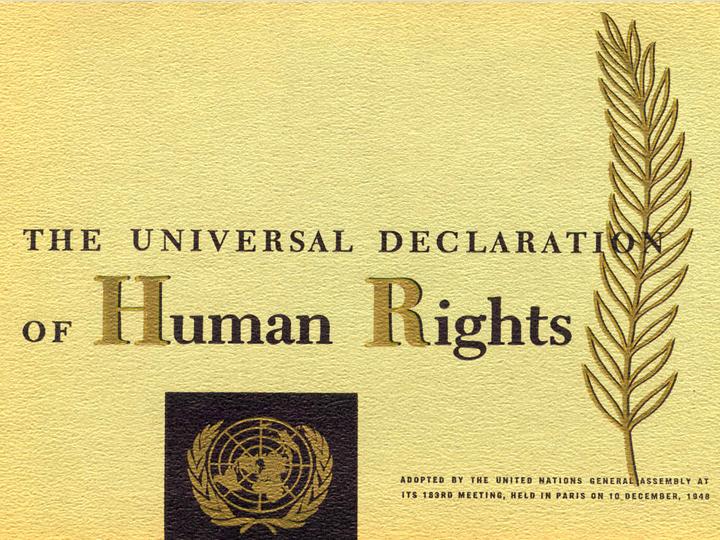
The principle applies to everyone in relation to all human rights and freedoms and it prohibits discrimination on the basis of a list of non-exhaustive categories such as sex, race, colour and so on. The principle of non-discrimination is complemented by the principle of equality, as stated in Article 1 of the Universal Declaration of Human Rights: “All human beings are born free and equal in dignity and rights.”

Both Rights and Obligations

Human rights entail both rights and obligations. States assume obligations and duties under international law to respect, to protect and to fulfil human rights. The obligation to respect means that States must refrain from interfering with or curtailing the enjoyment of human rights. The obligation to protect requires States to protect individuals and groups against human rights abuses. The obligation to fulfil means that States must take positive action to facilitate the enjoyment of basic human rights. At the individual level, while we are entitled our human rights, we should also respect the human rights of others.

source : http://www.ohchr.org/EN/Issues/Pages/WhatareHumanRights.aspx

posted by Hazie Kan <3


The Universal Declaration of Human Rights

http://www.success.co.il/knowledge/images/Pillar7-Society-Universal-Declaration-of-Human-Rights.jpg

This is another point of view about human rights and what is considered and categorized as human rights in our world.

On December 10, 1948 the General Assembly of the United Nations adopted and proclaimed the Universal Declaration of Human Rights the full text of which appears in the following pages. Following this historic act the Assembly called upon all Member countries to publicize the text of the Declaration and “to cause it to be disseminated, displayed, read and expounded principally in schools and other educational institutions, without distinction based on the political status of countries or territories.”

Whereas recognition of the inherent dignity and of the equal and inalienable rights of all members of the human family is the foundation of freedom, justice and peace in the world,

Whereas disregard and contempt for human rights have resulted in barbarous acts which have outraged the conscience of mankind, and the advent of a world in which human beings shall enjoy freedom of speech and belief and freedom from fear and want has been proclaimed as the highest aspiration of the common people,

Whereas it is essential, if man is not to be compelled to have recourse, as a last resort, to rebellion against tyranny and oppression, that human rights should be protected by the rule of law,

Whereas it is essential to promote the development of friendly relations between nations,

Whereas the peoples of the United Nations have in the Charter reaffirmed their faith in fundamental human rights, in the dignity and worth of the human person and in the equal rights of men and women and have determined to promote social progress and better standards of life in larger freedom,

Whereas Member States have pledged themselves to achieve, in co-operation with the United Nations, the promotion of universal respect for and observance of human rights and fundamental freedoms,

Whereas a common understanding of these rights and freedoms is of the greatest importance for the full realization of this pledge,

Now, Therefore THE GENERAL ASSEMBLY proclaims THIS UNIVERSAL DECLARATION OF HUMAN RIGHTS as a common standard of achievement for all peoples and all nations, to the end that every individual and every organ of society, keeping this Declaration constantly in mind, shall strive by teaching and education to promote respect for these rights and freedoms and by progressive measures, national and international, to secure their universal and effective recognition and observance, both among the peoples of Member States themselves and among the peoples of territories under their jurisdiction.


Article 1.

  • All human beings are born free and equal in dignity and rights.They are endowed with reason and conscience and should act towards one another in a spirit of brotherhood.

Article 2.

  • Everyone is entitled to all the rights and freedoms set forth in this Declaration, without distinction of any kind, such as race, colour, sex, language, religion, political or other opinion, national or social origin, property, birth or other status. Furthermore, no distinction shall be made on the basis of the political, jurisdictional or international status of the country or territory to which a person belongs, whether it be independent, trust, non-self-governing or under any other limitation of sovereignty.

Article 3.

  • Everyone has the right to life, liberty and security of person.

Article 4.

  • No one shall be held in slavery or servitude; slavery and the slave trade shall be prohibited in all their forms.

Article 5.

  • No one shall be subjected to torture or to cruel, inhuman or degrading treatment or punishment.

Article 6.

  • Everyone has the right to recognition everywhere as a person before the law.

Article 7.

  • All are equal before the law and are entitled without any discrimination to equal protection of the law. All are entitled to equal protection against any discrimination in violation of this Declaration and against any incitement to such discrimination.

Article 8.

  • Everyone has the right to an effective remedy by the competent national tribunals for acts violating the fundamental rights granted him by the constitution or by law.

Article 9.

  • No one shall be subjected to arbitrary arrest, detention or exile.

Article 10.

  • Everyone is entitled in full equality to a fair and public hearing by an independent and impartial tribunal, in the determination of his rights and obligations and of any criminal charge against him.

Article 11.

  • (1) Everyone charged with a penal offence has the right to be presumed innocent until proved guilty according to law in a public trial at which he has had all the guarantees necessary for his defence.
  • (2) No one shall be held guilty of any penal offence on account of any act or omission which did not constitute a penal offence, under national or international law, at the time when it was committed. Nor shall a heavier penalty be imposed than the one that was applicable at the time the penal offence was committed.

Article 12.

  • No one shall be subjected to arbitrary interference with his privacy, family, home or correspondence, nor to attacks upon his honour and reputation. Everyone has the right to the protection of the law against such interference or attacks.

Article 13.

  • (1) Everyone has the right to freedom of movement and residence within the borders of each state.
  • (2) Everyone has the right to leave any country, including his own, and to return to his country.

Article 14.

  • (1) Everyone has the right to seek and to enjoy in other countries asylum from persecution.
  • (2) This right may not be invoked in the case of prosecutions genuinely arising from non-political crimes or from acts contrary to the purposes and principles of the United Nations.

Article 15.

  • (1) Everyone has the right to a nationality.
  • (2) No one shall be arbitrarily deprived of his nationality nor denied the right to change his nationality.

Article 16.

  • (1) Men and women of full age, without any limitation due to race, nationality or religion, have the right to marry and to found a family. They are entitled to equal rights as to marriage, during marriage and at its dissolution.
  • (2) Marriage shall be entered into only with the free and full consent of the intending spouses.
  • (3) The family is the natural and fundamental group unit of society and is entitled to protection by society and the State.

Article 17.

  • (1) Everyone has the right to own property alone as well as in association with others.
  • (2) No one shall be arbitrarily deprived of his property.

Article 18.

  • Everyone has the right to freedom of thought, conscience and religion; this right includes freedom to change his religion or belief, and freedom, either alone or in community with others and in public or private, to manifest his religion or belief in teaching, practice, worship and observance.

Article 19.

  • Everyone has the right to freedom of opinion and expression; this right includes freedom to hold opinions without interference and to seek, receive and impart information and ideas through any media and regardless of frontiers.

Article 20.

  • (1) Everyone has the right to freedom of peaceful assembly and association.
  • (2) No one may be compelled to belong to an association.

Article 21.

  • (1) Everyone has the right to take part in the government of his country, directly or through freely chosen representatives.
  • (2) Everyone has the right of equal access to public service in his country.
  • (3) The will of the people shall be the basis of the authority of government; this will shall be expressed in periodic and genuine elections which shall be by universal and equal suffrage and shall be held by secret vote or by equivalent free voting procedures.

Article 22.

  • Everyone, as a member of society, has the right to social security and is entitled to realization, through national effort and international co-operation and in accordance with the organization and resources of each State, of the economic, social and cultural rights indispensable for his dignity and the free development of his personality.

Article 23.

  • (1) Everyone has the right to work, to free choice of employment, to just and favourable conditions of work and to protection against unemployment.
  • (2) Everyone, without any discrimination, has the right to equal pay for equal work.
  • (3) Everyone who works has the right to just and favourable remuneration ensuring for himself and his family an existence worthy of human dignity, and supplemented, if necessary, by other means of social protection.
  • (4) Everyone has the right to form and to join trade unions for the protection of his interests.

Article 24.

  • Everyone has the right to rest and leisure, including reasonable limitation of working hours and periodic holidays with pay.

Article 25.

  • (1) Everyone has the right to a standard of living adequate for the health and well-being of himself and of his family, including food, clothing, housing and medical care and necessary social services, and the right to security in the event of unemployment, sickness, disability, widowhood, old age or other lack of livelihood in circumstances beyond his control.
  • (2) Motherhood and childhood are entitled to special care and assistance. All children, whether born in or out of wedlock, shall enjoy the same social protection.

Article 26.

  • (1) Everyone has the right to education. Education shall be free, at least in the elementary and fundamental stages. Elementary education shall be compulsory. Technical and professional education shall be made generally available and higher education shall be equally accessible to all on the basis of merit.
  • (2) Education shall be directed to the full development of the human personality and to the strengthening of respect for human rights and fundamental freedoms. It shall promote understanding, tolerance and friendship among all nations, racial or religious groups, and shall further the activities of the United Nations for the maintenance of peace.
  • (3) Parents have a prior right to choose the kind of education that shall be given to their children.

Article 27.

  • (1) Everyone has the right freely to participate in the cultural life of the community, to enjoy the arts and to share in scientific advancement and its benefits.
  • (2) Everyone has the right to the protection of the moral and material interests resulting from any scientific, literary or artistic production of which he is the author.

Article 28.

  • Everyone is entitled to a social and international order in which the rights and freedoms set forth in this Declaration can be fully realized.

Article 29.

  • (1) Everyone has duties to the community in which alone the free and full development of his personality is possible.
  • (2) In the exercise of his rights and freedoms, everyone shall be subject only to such limitations as are determined by law solely for the purpose of securing due recognition and respect for the rights and freedoms of others and of meeting the just requirements of morality, public order and the general welfare in a democratic society.
  • (3) These rights and freedoms may in no case be exercised contrary to the purposes and principles of the United Nations.

Article 30.

  • Nothing in this Declaration may be interpreted as implying for any State, group or person any right to engage in any activity or to perform any act aimed at the destruction of any of the rights and freedoms set forth herein.

http://www.un.org/en/documents/udhr/

Posted by Munira

Resolution on the General Human Rights Situation in Africa

The African Commission on Human and Peoples’ Rights (the African Commission), meeting in its 46th Ordinary Session, in Banjul, the Gambia, from 11-25 November, 2009

CONSIDERING the provisions of the African Charter on Human and Peoples’ Rights, the Constitutive Act of the African Union, and other regional and international legal human rights instruments;

RECALLING the mandate of the African Commission on Human and Peoples’ Rights to promote and protect human rights in Africa;

CONSIDERING the objectives of the African Union, inter alia:

  • To promote peace, security, and stability on the continent;
  • To promote democratic principles and institutions, popular participation and good governance;
  • To promote and protect human and peoples’ rights in accordance with the African Charter on Human and Peoples’ Rights and other relevant human rights instruments;
  • To establish the necessary conditions which enable the continent to play its rightful role in the global economy and international negotiations;

CONCERNED at the climate of insecurity reigning in some African countries as a result of the persistent armed conflicts and the resurgence of fighting in others especially between rebel groups and armed forces, in Sudan, Chad, Central African Republic, Somalia, Eritrea, and in the Democratic Republic of Congo;

AWARE OF the political instability prevailing in certain parts of Africa as a result of the unconstitutional regime changes such as in the Republic of Guinea and in Guinea Bissau ;

CONSIDERING that post election violence has led to human rights violations even in conflict free areas and that arbitrary and extrajudicial executions have persisted long after the elections in some countries;

CONCERNED at thecrisis situation in the wake of the overthrow of constitutional rule leading to untoward situations in countries such as the Republic of Guinea and Guinea Bissau;

NOTING that in Kenya, despite the recommendations made by the Kriegler Commission of Enquiry on Elections and the Judge Waki Commission of Enquiry on post-election violence, the Government of National Unity is yet to implement the totality of the recommendations, to wit, the creation of a Special Court in Kenya to try perpetrators of the serious human rights violations committed during the post election violence;

DEEPLY CONCERNED at the situation in Eritrea where several cases of arbitrary arrests and protracted detentions without trial of former ministers, soldiers, members of the Government, members of opposition parties, journalists and media personnel have been noted, in violation of the provisions of the African Charter on Human and Peoples’ Rights ;

CONDEMNING the persistent and serious human rights violations in conflict zones affecting the most vulnerable segments of society, women and children ;

STRONGLY CONDEMNING human rights violations committed by rebel forces against the population in areas under their control, as well as the execution of civilians on the basis of summary judgements passed by special courts, the plundering of population’s property and the practice of kidnapping ;

CONCERNED at the threats and harassment of human rights defenders and journalists are subjected to for denouncing human rights violations committed during conflicts, as well as the continued infringements on the freedom of expression ;

CONCERNED at the impunity reigning in these countries :

  1. CALLS ON Member States to take legislative, material measures and provide human resources to put an end to the practice of impunity, as soon as possible;
  2. CONDEMNS the human rights violations committed by all parties against the civilian population in times of peace and in times of war;
  3. URGES the parties to the conflict to abide by principles of international humanitarian law and those enshrined in the African Charter on Human and Peoples’ Rights and to immediately desist from launching attacks against the civilian population;
  4. URGES the parties to the conflict to allow humanitarian organisations and United Nations Agencies to move around and to engage in their activities freely;
  5. URGES the Government of Kenya to implement the recommendations of the Kriegler Commission, the Waki Commission and the United Nations Special Rapporteur for Summary and Extrajudicial Executions;
  6. CALLS ON the National Council for Democracy and Development in Guinea (NCDD) to follow the mutually agreed timetable for the return to constitutional rule by the end of 2009 and to take measures to ease tensions in the country;
  7. CALLS ON the Republic of Guinea authorities to pursue their collaboration with the African Union, ECOWAS, the European Union, and the international community at large to ease the tension in the country
  8. URGES the Government of Eritrea to fulfil its obligations under the African Charter on Human and Peoples’ Rights, the Constitutive Act of the African Union and other relevant human rights instruments to which Eritrea is a party;
  9. CALLS ON all the warring parties in Sudan, Chad, DRC, and in Somalia to cooperate with the international community in order to find a lasting solution to the conflict raging in these areas.

Done in Banjul, The Gambia, 25 November 2009.

Posted by: Intan